
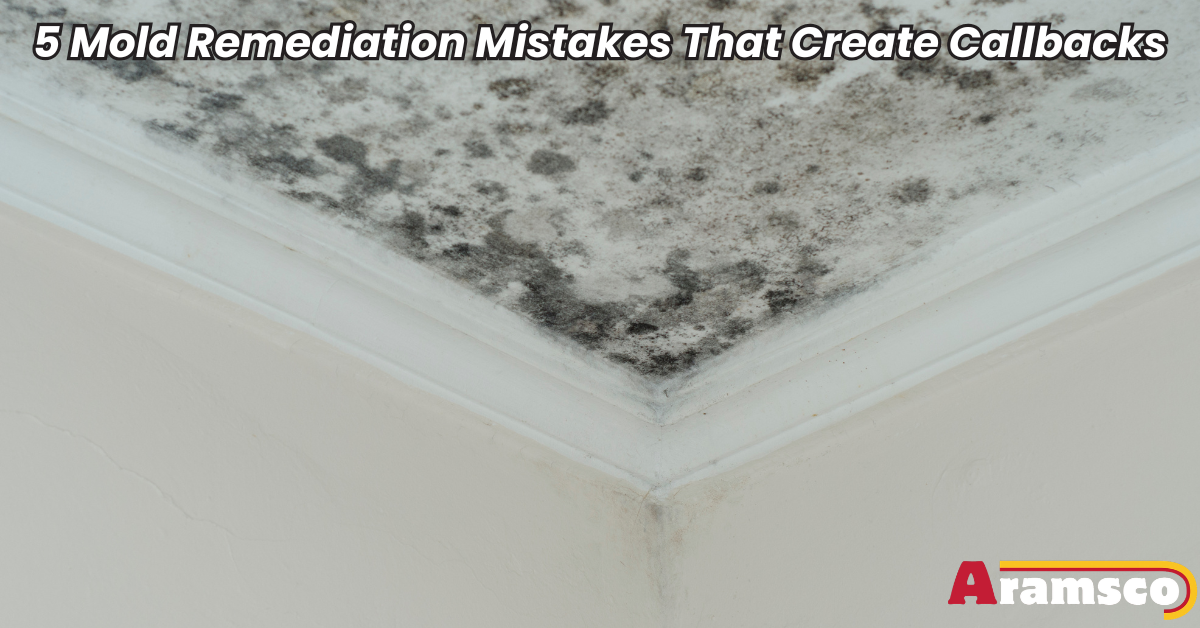
Mold remediation callbacks can be costly, frustrating, and damaging to customer trust. In many cases, they happen because one critical step was missed — the moisture source wasn’t corrected, contamination spread beyond the work area, materials weren’t fully cleaned or removed, or the job wasn’t properly documented before the crew left. By understanding the most common mistakes that lead to callbacks, contractors can protect their profit, improve job quality, and give customers greater confidence that the work was done right the first time.
1. Not Fixing the Moisture Source
The fastest way to create a callback is to remove visible mold while leaving the water problem unresolved. Leaks, condensation, humidity, poor drainage, and HVAC issues can all allow mold to return after the crew leaves.
Callback trigger: Mold, odor, or staining returns days or weeks later.
Pro fix: Identify, document, and correct the moisture source before closing the job.
 2. Underestimating the Scope of Contamination
Visible mold is often only part of the problem. Moisture and contamination can spread behind drywall, under flooring, into insulation, around trim, or inside cavities.
Callback trigger: The treated area looks clean, but odor or growth appears nearby.
Pro fix: Use moisture readings, inspection tools, building history, and customer interviews to confirm the full affected area.
3. Poor Containment and Cross-Contamination Control
Starting demolition before containment is secure can spread mold particles into clean areas. Weak barriers, poor negative pressure, unsealed openings, and careless traffic patterns can turn a contained job into a building-wide complaint.
Callback trigger: Customers notice dust, odor, or concerns outside the original work area.
Pro fix: Set containment first, maintain negative pressure, control access, and use HEPA filtration as required by the job plan.
4. Relying on Chemicals Instead of Removal and Cleaning
Antimicrobials can be useful, but they are not a replacement for removing contaminated materials, HEPA vacuuming, cleaning surfaces, and drying the structure. “Spray and pray” work often leads to failed expectations.
Callback trigger: Staining, odor, or customer concern remains after treatment.
Pro fix: Focus on source removal, detailed cleaning, proper drying, and verification — not just applying product.
5. Weak Final Cleaning, Drying, and Documentation
A job can look finished without being truly complete. Remaining dust, elevated moisture, incomplete debris removal, or missing photos and readings can all create disputes after the crew leaves.
Callback trigger: The customer asks, “How do I know it’s really done?” and there is no clear job record.
Pro fix: Confirm the area is dry, clean, debris-free, visually acceptable, and documented before demobilizing.
Mold remediation callbacks are expensive, but many are preventable. The best jobs start with proper inspection, moisture control, containment, removal, cleaning, drying, and documentation.
For contractors, the goal is not just to clean what the customer can see. The goal is to correct the conditions that allowed mold to grow, protect unaffected areas during the work, and leave behind a clear record that supports the result.
Aramsco carries the PPE, containment supplies, HEPA filtration, moisture detection tools, air movers, dehumidifiers, cleaning products, and remediation equipment professionals rely on to get the job done right the first time.