---
title: "Removing Heavy Oil Buildup from Carpet: A Professional Cleaner’s Guide"
description: Learn how to remove heavy oil and grease buildup from carpet using professional pre-spray, agitation, extraction, rinsing, drying, and prevention tips.
image: https://blog.aramsco.com/hubfs/Oil%20Stain%20Blog%20Cover%20(1).png
---
- [Home](https://aramsco.com)
- [Pro's Corner](https://blog.aramsco.com)
[](https://www.aramsco.com/)
- [Home](https://aramsco.com)
- [Pro's Corner](https://blog.aramsco.com)
- Account
- [locations](http://aramsco-live.epicorcommerce.com/locations/)
- [education](http://aramsco-live.epicorcommerce.com/education/)
- [about us](http://aramsco-live.epicorcommerce.com/aboutus/)
# Pro's Corner
## [Removing Heavy Oil Buildup from Carpet: A Professional Cleaner’s Guide](https://blog.aramsco.com/removing-heavy-oil-buildup-from-carpet-a-professional-cleaners-guide)
Posted by Aramsco Technical Staff on Jul 10th 2026
Removing Heavy Oil Buildup from Carpet: A Professional Cleaner’s Guide
6:39
.png?width=1200&height=628&name=Oil%20Stain%20Blog%20Cover%20(1).png)
Greasy, oil-loaded carpet is a common challenge for professional cleaners, especially in environments where cooking oils, food grease, and tracked-in soils are part of everyday traffic. Kitchens, restaurants, breakrooms, and nearby carpeted areas are especially prone to this type of buildup.
A major source of carpet oil contamination comes from food preparation. Cooking fatty foods such as meat, fried chicken, French fries, and other items prepared in hot oil can release grease into the surrounding environment. Some of that oil splatters directly onto nearby flooring, while some becomes airborne and settles onto hard surfaces.
Once greasy residue lands on kitchen tile or other hard floors, it can easily be picked up by shoes and carried into carpeted areas. In restaurants, this often shows up as a visible traffic lane leading from the kitchen entrance into the dining room.
While greasy carpet has always been a problem, the issue has become more noticeable with the increased use of polyester carpet. Oils tend to bond strongly to polyester fibers, as well as related fibers such as olefin and triexta. This makes the right chemistry, agitation, extraction, and drying process especially important.
## Choosing the Right Cleaning Chemistry for Oily Carpet
Heavy oil buildup requires more than a standard cleaning approach. Professional cleaners often rely on formulas designed specifically for grease, oil, and particulate soil. These products commonly combine non-ionic surfactants, high alkalinity, solvent blends, and rinse-friendly chemistry.
Powdered formulas can be especially useful because they allow ingredients such as d’limonene to be built directly into the product. Products like [Flex Powder with Citrus Solv](https://www.aramsco.com/bridgepoint-systems-carpet-cleaning-prespray-flex-powder-w-citrus-solv-6-5-lbs.html?utm_source=chatgpt.com) are designed for restoration-level carpet cleaning where grease and oils need to be broken down aggressively. Another effective option is adding a citrus booster, such as [Citrus Solv I](https://www.aramsco.com/bridgepoint-systems-cleaning-booster-citrus-solv-i-1-gallon.html?utm_source=chatgpt.com) or [Citrus Solv II](https://www.aramsco.com/bridgepoint-systems-cleaning-booster-citrus-solv-ii-1-gallon.html?utm_source=chatgpt.com), to an alkaline pre-spray when additional degreasing power is needed.
When cleaning polyester carpet, rinseability matters. Some [carpet additives and boosters](https://www.aramsco.com/catalog/category/view/s/carpet-additives-boosters/id/398/?utm_source=chatgpt.com) are easier to rinse from carpet than others, which can make a big difference in the final result. The goal is to break down bonded oil and suspended soil without leaving behind residue that can contribute to rapid resoiling.
High-alkaline cleaners that include solvent and surfactant technology can remove years of accumulated grease and soil when paired with proper dwell time, agitation, and hot water extraction.
## Step One: Vacuum and Apply an Aggressive Pre-Spray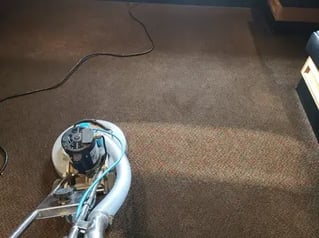
Start by vacuuming to remove dry soil that is not already bonded to the grease or carpet fiber. Once the loose soil has been removed, apply an aggressive [carpet pre-spray](https://www.aramsco.com/chemicals/cleaning/carpet-pre-sprays.html?utm_source=chatgpt.com) formulated for oily and greasy soils.
Use a professional sprayer, such as the [Hydro-Force Injection Sprayer Pro](https://www.aramsco.com/hydro-force-injection-sprayer-pro-5-quart.html?utm_source=chatgpt.com), to apply the pre-spray evenly and generously enough to reach the affected areas. Allow several minutes of dwell time so the chemistry can begin penetrating the oil and starting the emulsification process. This dwell time is critical because bonded oils need time to loosen before they can be effectively removed.
## Step Two: Agitate the Carpet
After the pre-spray has had time to work, use mechanical agitation to help move the chemistry into the oily soil load and across the carpet surface.
A counter-rotating brush machine, such as the [Brush Pro Rotating Brush Machine](https://www.aramsco.com/hydro-force-counter-rotating-brush-machine-brush-pro-17.html?utm_source=chatgpt.com), is an ideal tool for this step. It helps the pre-spray reach the bonded oils more effectively and can reduce the amount of dwell time needed. Good agitation also helps improve consistency across heavily soiled traffic lanes.
## Step Three: Extract with Hot Water and an Effective Rinse
Next, extract the carpet using hot water and an effective [carpet rinse](https://www.aramsco.com/catalog/category/view/s/carpet-rinses/id/403/?utm_source=chatgpt.com). A rinse such as [Flex Fire Extraction Rinse](https://www.aramsco.com/bridgepoint-systems-extraction-rinse-flex-fire-6-lbs.html?utm_source=chatgpt.com) can help support soil removal on heavily soiled commercial carpet.
Some areas may require additional wand strokes to remove remaining visible soil. In restaurant settings or areas with years of buildup, a single pass may not be enough to fully recover the appearance of the carpet.
## Step Four: Dry the Carpet Thoroughly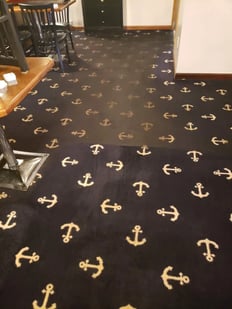
Proper drying is an important part of the cleaning process. Use additional dry strokes to remove as much moisture and soil as possible from deep within the carpet.
Set up [air movers](https://www.aramsco.com/equipment-instruments/drying/air-movers.html?utm_source=chatgpt.com) to speed drying and reduce the chance of moisture-related issues. This is especially important with polyester carpet. Polyester can feel dry on the surface while still holding moisture deeper near the primary backing. Because polyester does not absorb liquid the same way nylon does, more moisture can remain in the lower portion of the carpet.
In some heavily soiled areas, using a cotton bonnet may help absorb additional moisture after extraction.
## Step Five: Apply a Final Specialty Treatment
The final step is applying a specialty product that helps neutralize alkalinity, reduce wicking, and provide some level of soil resistance until the next scheduled cleaning. A product such as [Encapuguard Green](https://www.aramsco.com/bridgepoint-systems-carpet-protector-encapuguard-green-1-gallon.html?utm_source=chatgpt.com) can be used as part of the final treatment process after the carpet has been thoroughly rinsed and dried.
This type of product should not be viewed as a stand-alone fix. It works best when it follows thorough rinsing, effective extraction, and proper drying. When each part of the process is done correctly, the final treatment can help improve the finished result and support better appearance retention.
## Preventing Future Oil Buildup
For the best long-term results, oily carpet should not be treated as a one-time cleaning issue. In some locations, especially restaurants and food-service environments, better results may come from more frequent extraction cleaning of both carpet and adjacent tile.
It is also helpful to improve maintenance procedures on hard-surface floors in kitchens and prep areas. When oil buildup is controlled on tile, less grease is transferred into carpet.
Walk-off mats can also make a noticeable difference when placed where hard flooring meets carpet. These mats help capture soil and oil before they are tracked into dining areas, hallways, offices, or other carpeted spaces.
With the right chemistry, adequate dwell time, mechanical agitation, hot water extraction, thorough drying, and a smart maintenance plan, professional cleaners can produce strong results on even heavily oil-contaminated carpet.
*Visit our [website](http://www.aramsco.com) to view all the products Aramsco has to offer!*
[Aramsco Clean](https://blog.aramsco.com/tag/aramsco-clean)
- [Tweet](https://twitter.com/share)
[**BLOG HOME**](https://blog.aramsco.com/)
**Where the professionals go to learn about:**
- lead and asbestos abatement
- professional cleaning
- mold, fire, and water restoration
- concrete surface preparation
- business management
### Subscribe to Blog
Search Search Google
### Recent Posts
### Posts by Topic
- [Business (41)](https://blog.aramsco.com/tag/business)
- [Aramsco Clean (35)](https://blog.aramsco.com/tag/aramsco-clean)
- [Aramsco Restore (28)](https://blog.aramsco.com/tag/aramsco-restore)
- [carpet cleaning (27)](https://blog.aramsco.com/tag/carpet-cleaning)
- [Chemistry (19)](https://blog.aramsco.com/tag/chemistry)
- [Rugs (14)](https://blog.aramsco.com/tag/rugs)
- [Carpet (12)](https://blog.aramsco.com/tag/carpet)
- [Aramsco Surface (11)](https://blog.aramsco.com/tag/aramsco-surface)
- [target marketing (11)](https://blog.aramsco.com/tag/target-marketing)
- [Concrete (10)](https://blog.aramsco.com/tag/concrete)
- [Education (9)](https://blog.aramsco.com/tag/education)
- [deodorization (9)](https://blog.aramsco.com/tag/deodorization)
- [special agents (9)](https://blog.aramsco.com/tag/special-agents)
- [upholstery cleaning (9)](https://blog.aramsco.com/tag/upholstery-cleaning)
- [Carpet Presprays (8)](https://blog.aramsco.com/tag/carpet-presprays)
- [Tile & Grout (8)](https://blog.aramsco.com/tag/tile-grout)
- [customer service (8)](https://blog.aramsco.com/tag/customer-service)
- [encapsulation (8)](https://blog.aramsco.com/tag/encapsulation)
- [COVID-19 (7)](https://blog.aramsco.com/tag/covid-19)
- [Spotting (7)](https://blog.aramsco.com/tag/spotting)
- [Stain Removal (7)](https://blog.aramsco.com/tag/stain-removal)
- [Surface Preparation (6)](https://blog.aramsco.com/tag/surface-preparation)
- [Business Finance (5)](https://blog.aramsco.com/tag/business-finance)
- [Customer communication and storytelling (5)](https://blog.aramsco.com/tag/customer-communication-and-storytelling)
- [Grow your business (5)](https://blog.aramsco.com/tag/grow-your-business)
- [carpet protector (5)](https://blog.aramsco.com/tag/carpet-protector)
- [Equipment (4)](https://blog.aramsco.com/tag/equipment)
- [Flooring (3)](https://blog.aramsco.com/tag/flooring)
- [concrete surface preparation (3)](https://blog.aramsco.com/tag/concrete-surface-preparation)
- [sales (3)](https://blog.aramsco.com/tag/sales)
- [IICRC Classes (2)](https://blog.aramsco.com/tag/iicrc-classes)
- [Restoration (2)](https://blog.aramsco.com/tag/restoration)
- [Targeted Marketing (2)](https://blog.aramsco.com/tag/targeted-marketing)
- [Trauma Cleaning (2)](https://blog.aramsco.com/tag/trauma-cleaning)
- [Truckmount (2)](https://blog.aramsco.com/tag/truckmount)
- [carpet coloring (2)](https://blog.aramsco.com/tag/carpet-coloring)
- [Aramsco Service (1)](https://blog.aramsco.com/tag/aramsco-service)
- [Customer Acquisition (1)](https://blog.aramsco.com/tag/customer-acquisition)
- [fiber identification (1)](https://blog.aramsco.com/tag/fiber-identification)
- [news releases (1)](https://blog.aramsco.com/tag/news-releases)
- [portables (1)](https://blog.aramsco.com/tag/portables)
See all
### Blog Archive
- [Tom Forsythe (130)](https://blog.aramsco.com/author/tom-forsythe)
- [Drew Crawford (50)](https://blog.aramsco.com/author/drew-crawford)
- [Aramsco Technical Staff (27)](https://blog.aramsco.com/author/aramsco-technical-staff)
- [Scott Warrington (18)](https://blog.aramsco.com/author/scott-warrington)
- [Jared Twitchell (15)](https://blog.aramsco.com/author/jared-twitchell)
- [Alex Morrill (12)](https://blog.aramsco.com/author/alex-morrill)
- [Steve Johnson (7)](https://blog.aramsco.com/author/steve-johnson)
- [Angela Buckendorf (5)](https://blog.aramsco.com/author/angela-buckendorf)
- [Rachel Adams (4)](https://blog.aramsco.com/author/rachel-adams)
- [Ron Colling (3)](https://blog.aramsco.com/author/ron-colling)
- [Seth Gifford (2)](https://blog.aramsco.com/author/seth-gifford)
- [Nancy Macdonald (2)](https://blog.aramsco.com/author/nancy-macdonald)
- [Gregg Sargent (2)](https://blog.aramsco.com/author/gregg-sargent)
- [Angela Buckendorf & Drew Crawford (1)](https://blog.aramsco.com/author/angela-buckendorf-drew-crawford)
- [Savaana Sihapanya (1)](https://blog.aramsco.com/author/savaana-sihapanya)
- [Dane Gregory (1)](https://blog.aramsco.com/author/dane-gregory)
- [Sandra Hummel (1)](https://blog.aramsco.com/author/sandra-hummel)
- [Luke Draeger (1)](https://blog.aramsco.com/author/luke-draeger)
- [Doyle Bloss (1)](https://blog.aramsco.com/author/doyle-bloss)
- [Tim Schaelling (1)](https://blog.aramsco.com/author/tim-schaelling)
- [Lucas Whitmer (1)](https://blog.aramsco.com/author/lucas-whitmer)
- [Schyler Lewis (1)](https://blog.aramsco.com/author/schyler-lewis)
- [Drew Crawford & Alex Morrill (1)](https://blog.aramsco.com/author/drew-crawford-alex-morrill)
- [Michelle Smith (1)](https://blog.aramsco.com/author/michelle-smith)
See all
#### Current Promotions
Great deals on abatement, safety, surface preparation, and carpet cleaning equipment and chemicals!
[Click to Save](https://aramsco.com/on-sale.html)
#### Online Catalog
All the restoration, safety, cleaning and surface preparation products you need in glossy, digital print.
[See Products](https://cx.aramsco.com/?__hstc=88961988.ca7266f9997610aee14ebd89f4f37653.1557724048361.1557724048361.1557730574295.2&__hssc=88961988.1.1557730574295&__hsfp=35742670)
#### Nexus Conference
Updates on the industry's top conference. Demos, Education, Networking,
and Fun!
[Learn More](https://nexus.aramsco.com/?__hstc=88961988.ca7266f9997610aee14ebd89f4f37653.1557724048361.1557724048361.1557730574295.2&__hssc=88961988.1.1557730574295&__hsfp=35742670)
- Shop By Categories
- [Air Scrubbers](https://www.aramsco.com/equipment-instruments/negative-air-air-scrubbers.html)
- [Carpet Cleaning Chemicals](https://www.aramsco.com/chemicals/cleaning.html)
- [Cleaning Equipment](https://www.aramsco.com/equipment-instruments/cleaning-equipment.html)
- [Cleaning Tools](https://www.aramsco.com/tools-supplies/cleaning-tools-supplies.html)
- [Concrete Grinding](https://aramsco.com/equipment-instruments/grinders-polishers.html)
- [Disinfectants & Antimicrobials](https://www.aramsco.com/chemicals/disinfectants-antimicrobials.html)
- [Drying Equipment](https://www.aramsco.com/equipment-instruments/drying.html)
- [Floor Scrapers](https://www.aramsco.com/equipment-instruments/scrapers.html)
- [Mastic Removers](https://www.aramsco.com/chemicals/adhesive-coating-removers.html)
- [Odor Neutralizers](https://www.aramsco.com/chemicals/odor-control.html)
- [Poly Sheeting](https://www.aramsco.com/plastics-adhesives/poly-sheeting.html)
- [Respirators](https://www.aramsco.com/safety-ppe/respirators-respiratory-protection.html)
- [Shot Blasting](https://www.aramsco.com/equipment-instruments/shot-abrasive-blasting.html)
- [Thermal Imaging](https://www.aramsco.com/equipment-instruments/meters-testing/infrared-temperature.html)
- [Vacuums](https://www.aramsco.com/equipment-instruments/vacuums.html)
- Resources
- [Pro's Corner](https://blog.aramsco.com)
- [Classifieds](https://classifieds.aramsco.com/)
- [Monthly Ad](https://cx.aramsco.com/)
- [Education Schedule](https://www.cvent.com/c/calendar/ab53c6cb-fee0-44a6-a384-c51a2a4b32c0)
- [Equipment Financing](https://aztecfinancial.com/)
- [Equipment Rental](https://www.aramsco.com/training-rentals-repairs)
- [Equipment Repair](https://www.aramsco.com/training-rentals-repairs)
- [Site Map](https://www.aramsco.com/training-rentals-repairs)
- Company Info
- [About Us](https://www.aramsco.com/aboutus)
- [Careers](https://workforcenow.adp.com/jobs/apply/posting.html?client=aramsco&ccId=19000101_000001&type=MP&lang=en_US)
- [Contact Us](https://www.aramsco.com/contact)
- [News](https://www.aramsco.com/news)
- OUR BRANDS
- [Aztec Financial](https://aztecfinancial.com/)
- [NSS](https://nssusa.com/)
- [Safety Express](http://safetyexpress.com/?__hstc=88961988.ca7266f9997610aee14ebd89f4f37653.1557724048361.1557724048361.1557730574295.2&__hssc=88961988.2.1557730574295&__hsfp=35742670)
- Policies
- [Privacy Policy](https://www.aramsco.com/privacy-policy)
- [Return Policy](https://www.aramsco.com/terms-conditions#returns)
- [Shipping Policy](https://www.aramsco.com/terms-conditions#shipping)
- [Terms & Conditions](https://www.aramsco.com/terms-conditions)
- Corporate Location
- Find a location Near You
- [Location image](https://www.aramsco.com/locations)
Corporate Location
- Aramsco, Inc.
Five Radnor Corporate Center
100 Matsonford Road Suite 510
Radnor, PA 19087
- (800) 767-6933
- customer.service@aramsco.com
Copyright © 2025 Aramsco. All rights reserved.
```json
{
"@context" : "https://schema.org",
"@type" : "BlogPosting",
"author" : {
"@type" : "Person",
"name" : "Aramsco Technical Staff",
"url" : "https://blog.aramsco.com/author/aramsco-technical-staff"
},
"dateModified" : "2026-07-10T18:17:11.504Z",
"datePublished" : "2026-07-10T18:17:11.000Z",
"headline" : "Removing Heavy Oil Buildup from Carpet: A Professional Cleaner’s Guide",
"image" : [ "https://blog.aramsco.com/hubfs/Oil%20Stain%20Blog%20Cover%20(1).png" ],
"mainEntityOfPage" : {
"@id" : "https://blog.aramsco.com/removing-heavy-oil-buildup-from-carpet-a-professional-cleaners-guide",
"@type" : "WebPage"
},
"publisher" : {
"@type" : "Organization",
"logo" : {
"@type" : "ImageObject",
"url" : "https://blog.aramsco.com/hubfs/Logos/Aramsco%20R%20Family%20-%20Equipped%20for%20Success.png"
},
"name" : "Aramsco"
}
}
```